Hearing the Shofar: A Call to Spiritual Awakening

One of the most recognizable traditions of Rosh Hashanah is the blowing of the shofar, a horn made from a ram’s horn. Its sound is raw, piercing and impossible to ignore.
The shofar serves as a spiritual alarm clock. It calls people to wake up from moral complacency and reflect on their actions over the past year. The broken, uneven notes symbolize human vulnerability, while the long final blast represents hope and renewal.
Hearing the shofar reminds worshippers that change is possible and that the new year offers a chance to begin again with greater awareness and intention.
Eating Apples Dipped in Honey: Wishing for a Sweet Year

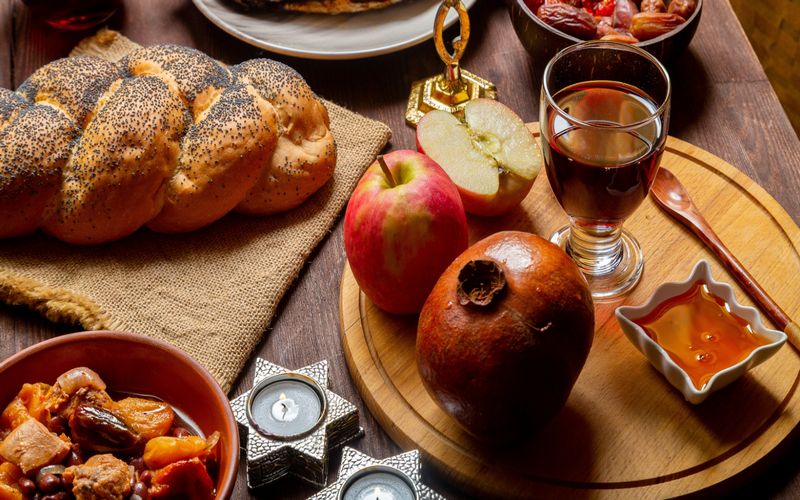
Perhaps the most beloved Rosh Hashanah tradition is eating apples dipped in honey. This simple act carries a powerful message: a hope for sweetness in the year ahead.
Apples are associated with beauty and nourishment in Jewish tradition, while honey represents abundance and joy. Together, they symbolize a collective prayer for a year filled with kindness, health and peace.
This custom is often accompanied by a blessing asking for a “good and sweet year,” making it one of the most emotionally resonant moments of the holiday.
Round Challah: The Cycle of Life and Continuity

On Rosh Hashanah, the traditional braided challah bread is baked in a round shape instead of its usual long loaf.
The circular form represents the cycle of life, continuity and the ongoing flow of time. Unlike the straight shape, the round challah has no beginning or end, symbolizing eternity and the interconnectedness of past, present and future.
Often, the challah is lightly sweetened with honey or raisins, reinforcing the theme of sweetness and renewal for the year ahead.
Tashlich: Casting Away Mistakes

Tashlich is a symbolic ritual performed on the afternoon of Rosh Hashanah. Participants go to a flowing body of water, such as a river or stream, and cast breadcrumbs or small pieces of food into the water.
This act represents letting go of sins, regrets and harmful behaviors from the past year. As the water carries the crumbs away, it symbolizes the hope that mistakes can be released and not carried forward.
Tashlich encourages accountability while also offering emotional relief and a sense of spiritual cleansing.
Eating Pomegranates: Abundance and Good Deeds

Pomegranates are often eaten during Rosh Hashanah because they are traditionally believed to contain 613 seeds, corresponding to the 613 commandments in the Torah.
Whether or not the number is exact, the symbolism is clear. The pomegranate represents abundance, fertility and the hope that one’s good deeds in the coming year will be as plentiful as its seeds.
Eating pomegranates during the holiday is a wish for a life rich in meaning, compassion and moral action.
Lighting Holiday Candles: Bringing Light Into the New Year

As with many Jewish holidays, Rosh Hashanah begins with the lighting of candles, typically performed by a woman of the household.
The act of lighting candles symbolizes bringing light, warmth and peace into the home. Spiritually, it represents the desire to illuminate the year ahead with wisdom, clarity and kindness.
The gentle glow of the candles sets a reflective tone for the holiday and marks the transition from ordinary time into sacred time.
Special Holiday Prayers: Reflection and Renewal

Rosh Hashanah prayer services are longer and more contemplative than regular services. They focus on themes of remembrance, sovereignty and judgment.
Rather than emphasizing punishment, these prayers encourage self-examination and growth. Worshippers are invited to reflect on their actions, acknowledge shortcomings and commit to positive change.
The prayers emphasize that while the future is not fixed, human choices matter — and sincere effort can shape the year ahead.
Avoiding Bitter Foods: Choosing Sweetness Over Pain
Another meaningful tradition during Rosh Hashanah is the intentional avoidance of bitter or sour foods.
This custom reflects a desire to leave bitterness behind and approach the new year with optimism and hope. Instead, sweet foods like honey, dates and sweetened vegetables are emphasized.
The food choices made during Rosh Hashanah are symbolic declarations of intention — choosing sweetness, kindness and positivity in the year to come.
Greeting Others With Blessings for a Good Year

During Rosh Hashanah, it is customary to greet friends and family with blessings wishing them a good, sweet and meaningful year.
These greetings reinforce the communal nature of the holiday. Rosh Hashanah is not only about personal reflection but also about strengthening relationships and expressing goodwill toward others.
Offering blessings reminds people that words carry power and that kindness toward others is an essential part of spiritual renewal.
Why Symbolism Matters in Rosh Hashanah
Rosh Hashanah traditions are intentionally symbolic. Rather than abstract ideas, they use sounds, tastes, actions and rituals to convey deep spiritual truths.
These customs help translate complex concepts — repentance, renewal, responsibility — into experiences that can be felt and remembered. They invite participants to engage emotionally and spiritually, not just intellectually.
Through these traditions, Rosh Hashanah becomes not just a date on the calendar, but a meaningful pause to reset one’s values and direction.
Final Thoughts
Rosh Hashanah is a holiday rooted in hope. Its traditions acknowledge human imperfection while affirming the possibility of change and growth. From the sound of the shofar to the sweetness of honey, every ritual carries a message of renewal, accountability and compassion.
By understanding the symbolic meanings behind these customs, Rosh Hashanah becomes more than a tradition — it becomes a deeply personal and transformative experience, offering a chance to begin the new year with intention, humility and hope.