Jewish Quarter (Josefov), Prague, Czech Republic

Prague’s Jewish Quarter, known as Josefov, is one of the best-preserved Jewish heritage areas in the world. Dating back to the Middle Ages, it contains an extraordinary concentration of synagogues, cemeteries, and communal buildings within a small area.
Highlights include the Old-New Synagogue, Europe’s oldest active synagogue, the atmospheric Old Jewish Cemetery with its densely layered gravestones, and several historic synagogues now serving as museums. Walking through Josefov feels like stepping into centuries of Jewish history, from medieval life to the tragedies of the 20th century.
What makes Josefov especially significant is its continuity. Despite immense loss during the Holocaust, the quarter remains a powerful cultural and educational center, preserving stories that might otherwise have been erased.
Auschwitz-Birkenau Memorial and Museum, Poland

While profoundly painful, Auschwitz-Birkenau is an essential Jewish heritage site and a place of global remembrance. Located near Oświęcim in southern Poland, it was the largest Nazi concentration and extermination camp during World War II.
More than one million Jews were murdered here. Today, the preserved barracks, watchtowers, rail tracks, and personal artifacts stand as silent witnesses to the Holocaust. The memorial is not only about mourning the victims but also about confronting history with honesty and responsibility.
Visiting Auschwitz is emotionally challenging, yet deeply meaningful. It serves as a reminder of where hatred can lead—and why memory must be preserved for future generations.
The Jewish Ghetto of Venice, Italy

The word “ghetto” itself originates from Venice, where Europe’s first officially designated Jewish ghetto was established in 1516. Located in the Cannaregio district, the Venetian Ghetto is a unique blend of architectural, cultural, and historical significance.
Despite restrictions imposed on its residents, the ghetto became a vibrant center of Jewish life. Today, visitors can explore historic synagogues representing different Jewish traditions, the Jewish Museum of Venice, and quiet squares once filled with daily communal life.
Unlike many heritage sites frozen in time, Venice’s Jewish Ghetto remains a living neighborhood, offering a rare opportunity to see how Jewish life adapted and endured under challenging circumstances.
Kazimierz District, Kraków, Poland

Once a thriving Jewish city within a city, Kazimierz was the cultural and spiritual heart of Jewish Kraków for centuries. Before World War II, it was home to synagogues, schools, markets, and a dynamic artistic scene.
Today, Kazimierz has been revitalized as a cultural district, where restored synagogues stand alongside cafés, galleries, and memorials. Sites such as the Remuh Synagogue and cemetery provide insight into religious life, while street art and cultural festivals reflect renewed interest in Jewish heritage.
Kazimierz represents both loss and revival—a place where history is acknowledged, and cultural memory is actively being re-engaged.
Great Synagogue of Budapest, Hungary

The Dohány Street Synagogue in Budapest is the largest synagogue in Europe and one of the most impressive Jewish religious buildings in the world. Built in the 19th century, its Moorish Revival architecture sets it apart visually, with ornate interiors and twin towers visible across the city.
Beyond its beauty, the synagogue complex includes a Jewish museum, memorial gardens, and a cemetery honoring victims of the Holocaust. It also stands near what was once the Budapest Ghetto, adding historical depth to the site.
The Great Synagogue is not only a monument but also an active place of worship, symbolizing the resilience of Hungarian Jewish life.
Jewish Quarter of Amsterdam, Netherlands

Amsterdam has long been associated with religious tolerance, and its Jewish Quarter reflects centuries of Jewish settlement and cultural contribution. In the 17th century, the city became a refuge for Jews fleeing persecution elsewhere in Europe.
Key sites include the Portuguese Synagogue, a stunning example of Sephardic architecture, and the Jewish Cultural Quarter, which encompasses museums, memorials, and educational centers. Nearby, the Anne Frank House offers a deeply personal connection to Holocaust history.
Amsterdam’s Jewish heritage stands out for its emphasis on cultural life, intellectual freedom, and integration within the broader urban fabric.
Jewish Ghetto of Rome, Italy
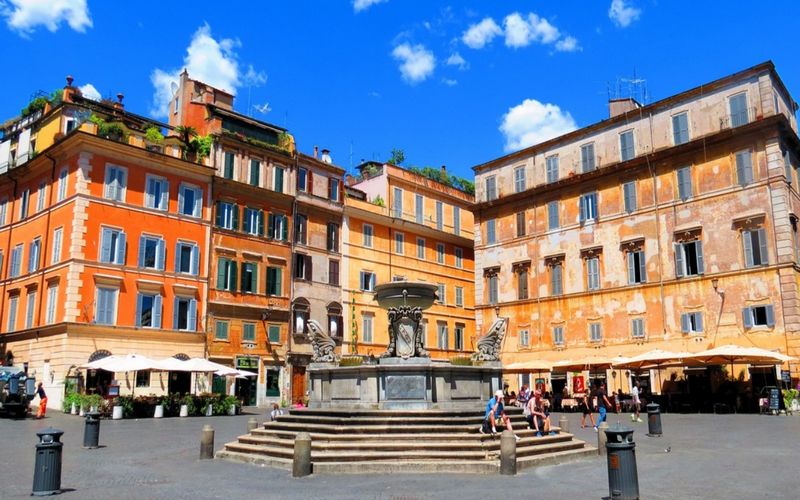
The Jewish Ghetto of Rome is the oldest in Europe, established in 1555. Despite centuries of enforced isolation and discrimination, Rome’s Jewish community survived and maintained a strong cultural identity.
Today, the neighborhood is known for its historic synagogues, traditional kosher cuisine, and a sense of continuity rarely found elsewhere. The Great Synagogue of Rome, built after the ghetto walls were dismantled, symbolizes both emancipation and endurance.
Walking through Rome’s Jewish Ghetto reveals layers of history—from ancient Roman times to modern Italy—making it one of Europe’s most compelling Jewish heritage sites.
Jewish Museum Berlin, Germany

The Jewish Museum Berlin is one of the most important institutions dedicated to Jewish history and culture in Europe. Its striking contemporary architecture is intentionally designed to evoke disruption, loss, and memory.
Inside, exhibitions trace two thousand years of Jewish life in Germany, exploring themes of faith, culture, persecution, and renewal. The museum does not shy away from difficult topics but places them within a broader narrative of Jewish contribution to German society.
This site stands out for its ability to engage visitors emotionally and intellectually, using design and storytelling to make history deeply personal.
Jewish Quarter of Thessaloniki, Greece

Often called the “Jerusalem of the Balkans,” Thessaloniki once had a Jewish population that made up nearly half the city. Sephardic Jews, expelled from Spain in the 15th century, found refuge here and shaped the city’s identity for centuries.
Although much was lost during the Holocaust, remnants of Jewish heritage remain, including museums, memorials, and preserved sites. The Jewish Museum of Thessaloniki offers insight into the city’s rich Sephardic past and tragic wartime history.
Thessaloniki’s Jewish heritage is especially important for understanding how Jewish life once flourished in southeastern Europe.
Preserving Memory Through Place
Jewish heritage sites across Europe are more than historical landmarks. They are places of memory, resilience, and education. Each synagogue, ghetto, cemetery, and museum tells a story—not only of suffering, but also of creativity, faith, and survival.
Visiting these sites fosters understanding and empathy while honoring the generations who shaped Europe’s cultural landscape. In preserving them, Europe preserves an essential part of its own identity.
From Prague’s ancient synagogues to Thessaloniki’s Sephardic legacy, these nine destinations remind us that Jewish history is not a footnote—it is a central chapter of Europe’s past, present, and future.