Synagogues are places of worship, gathering, and continuity — but many are also architectural masterpieces that reflect centuries of history, cultural exchange, and artistic ambition. Across continents, Jewish communities have built synagogues that blend local styles with sacred symbolism, resulting in some of the most beautiful religious buildings in the world. From grand European landmarks to elegant urban sanctuaries, these nine synagogues stand out for their beauty, craftsmanship, and enduring legacy.
1. Dohány Street Synagogue — Budapest, Hungary
Often referred to as the Great Synagogue of Budapest, this monumental building is among the largest synagogues in the world and one of the most visually striking. Designed in the Moorish Revival style, its façade features colorful brickwork, intricate geometric patterns, and twin onion-shaped domes that dominate the city skyline.

Inside, the vast sanctuary is richly decorated, with ornate details, elegant columns, and a powerful sense of scale. Beyond its beauty, the synagogue holds deep historical significance, having witnessed both the cultural flourishing and the tragic moments of Hungarian Jewish history. It remains a symbol of resilience and remembrance.
2. Eldridge Street Synagogue — New York City, USA
Tucked into Manhattan’s Lower East Side, the Eldridge Street Synagogue is a stunning reflection of Jewish immigrant life in late 19th-century America. Its architecture blends Gothic, Romanesque, and Moorish elements, creating a richly textured and expressive space.
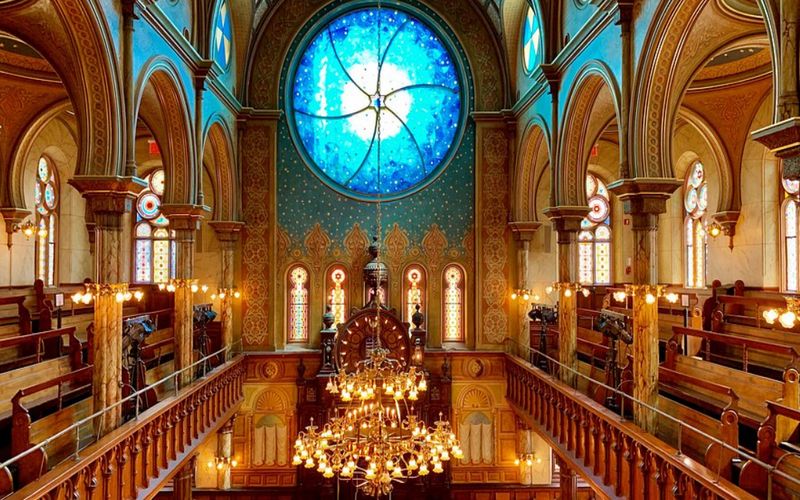
The interior is particularly captivating, with soaring arches, hand-painted details, and magnificent stained glass that fills the sanctuary with warm light. After decades of restoration, the synagogue now stands as both a place of worship and a cultural landmark, celebrating the dreams and determination of early Jewish immigrants.
3. Spanish Synagogue — Prague, Czech Republic
Located in Prague’s historic Jewish Quarter, the Spanish Synagogue is one of the most elaborately decorated synagogues in Europe. Inspired by Moorish architecture from medieval Spain, its interior dazzles with golden hues, intricate patterns, and elegant arches.
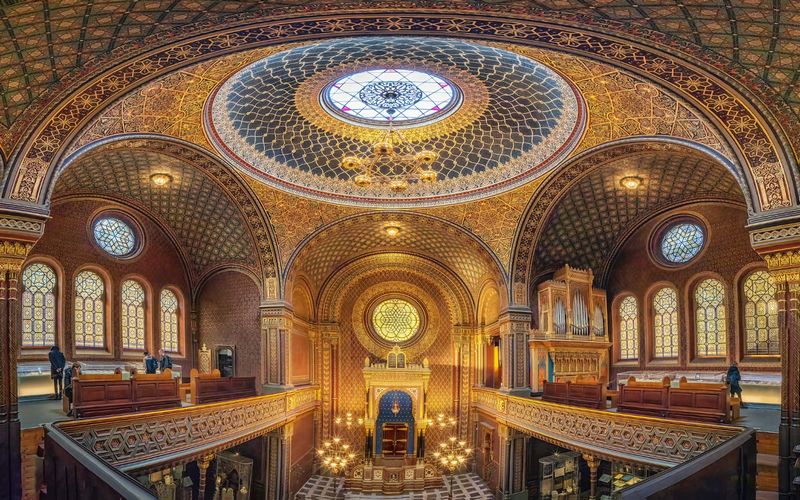
Every surface seems to tell a story — from the richly ornamented walls to the beautifully painted ceiling. Today, the synagogue also functions as a cultural and museum space, preserving the history of Czech Jewish life while remaining one of Prague’s most breathtaking interiors.
4. Subotica Synagogue — Subotica, Serbia
A true architectural gem, the Subotica Synagogue is a masterpiece of Hungarian Art Nouveau. Built in the early 20th century, it combines flowing lines, floral motifs, vibrant stained glass, and a distinctive central dome.
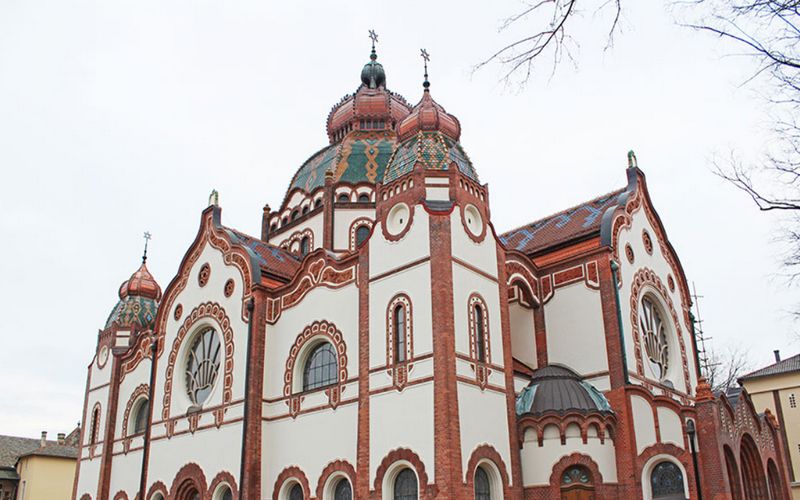
What makes this synagogue particularly special is its bold artistic vision — blending modern design with Jewish symbolism in a way rarely seen in religious buildings. After extensive restoration, it has regained its former glory and is widely regarded as one of the most beautiful synagogues in the world.
5. Portuguese Synagogue (Esnoga) — Amsterdam, Netherlands
The Portuguese Synagogue in Amsterdam offers a very different kind of beauty — one rooted in simplicity, harmony, and light. Built in the 17th century by the Sephardic Jewish community, its design emphasizes balance and serenity rather than ornamentation.
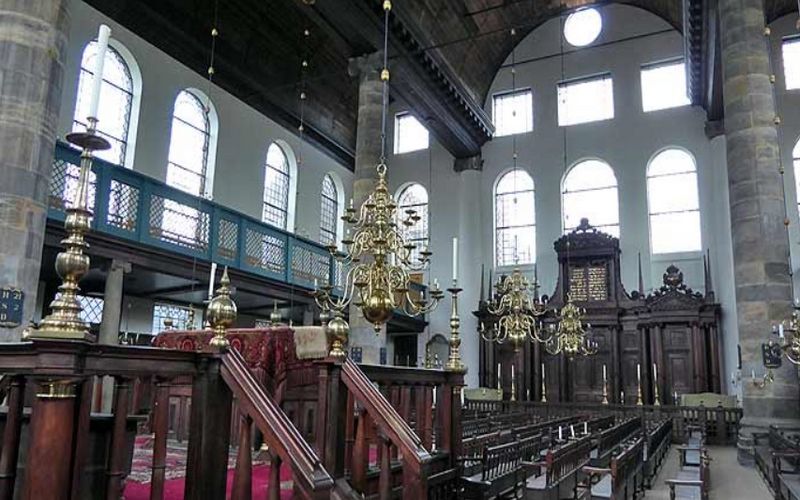
High windows flood the vast interior with natural light, illuminating wooden benches, sand-covered floors, and an impressive Torah ark. The atmosphere is timeless and contemplative, making the Esnoga not only architecturally significant but also deeply moving.
6. Włodawa Synagogue — Włodawa, Poland
Part of a historic synagogue complex, the Włodawa Synagogue is a stunning example of Baroque influence on Jewish religious architecture. Its high ceiling and four central columns create an elegant and symmetrical interior layout.
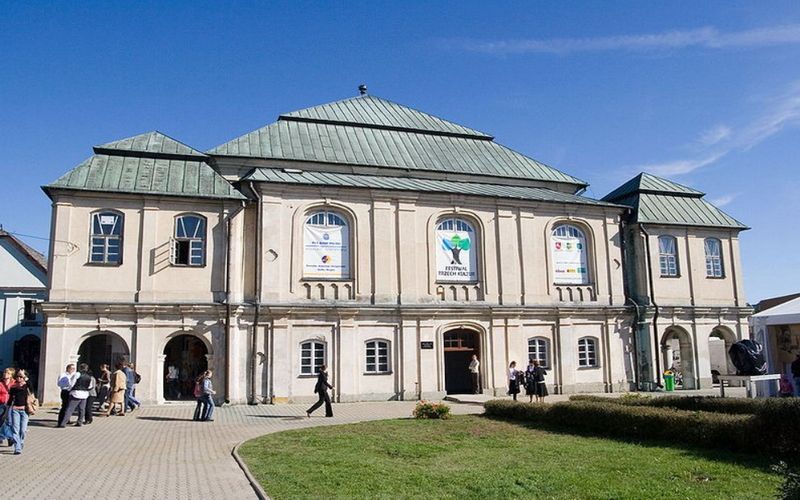
Decorative ceiling paintings, featuring symbolic animals and ornamental motifs, add character and warmth to the space. Today, the synagogue serves as a museum, preserving the memory of a once-thriving Jewish community and showcasing the artistry of Eastern European synagogue design.
7. Neve Shalom Synagogue — Istanbul, Turkey
Neve Shalom Synagogue stands as the heart of Jewish life in modern Istanbul and reflects centuries of Sephardic tradition. Its design blends Jewish religious elements with Ottoman and Mediterranean influences, creating a dignified and welcoming space.
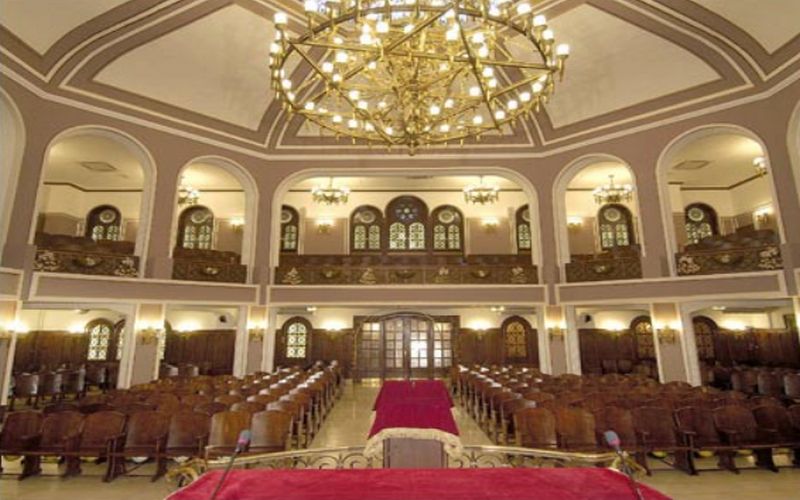
The interior features a striking central dome, elegant chandeliers, and finely crafted details that highlight the synagogue’s importance both spiritually and culturally. It remains an active place of worship and a powerful symbol of Jewish continuity in Turkey.
8. Rodeph Shalom Synagogue — Philadelphia, USA
Rodeph Shalom Synagogue is a refined blend of Moorish and early 20th-century American architectural styles. Its exterior is understated, but the interior reveals a richly decorated sanctuary filled with warm colors, intricate tile work, and graceful arches.
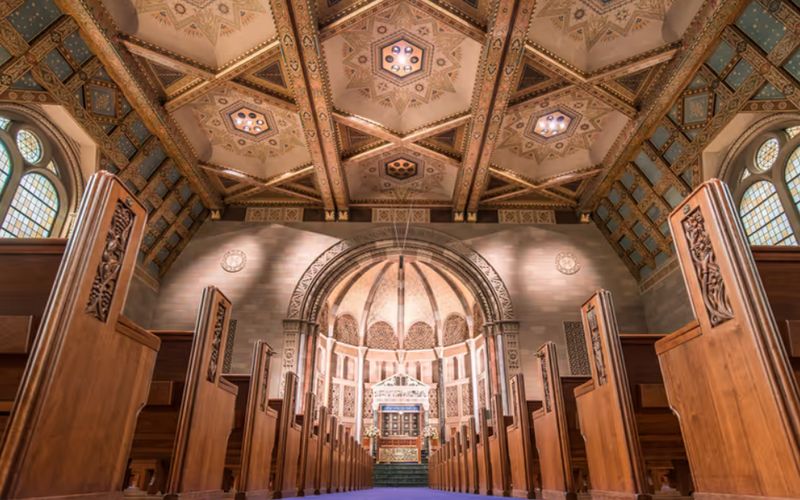
The design creates an intimate yet majestic atmosphere, balancing artistic beauty with spiritual focus. It stands as a testament to how synagogue architecture evolved in the United States while maintaining strong ties to traditional forms.
9. Central Synagogue — New York City, USA
Rising above Manhattan’s Midtown streets, Central Synagogue is one of the most recognizable Jewish landmarks in the United States. Built in the Moorish Revival style, its dramatic twin towers and horseshoe arches make a bold architectural statement.
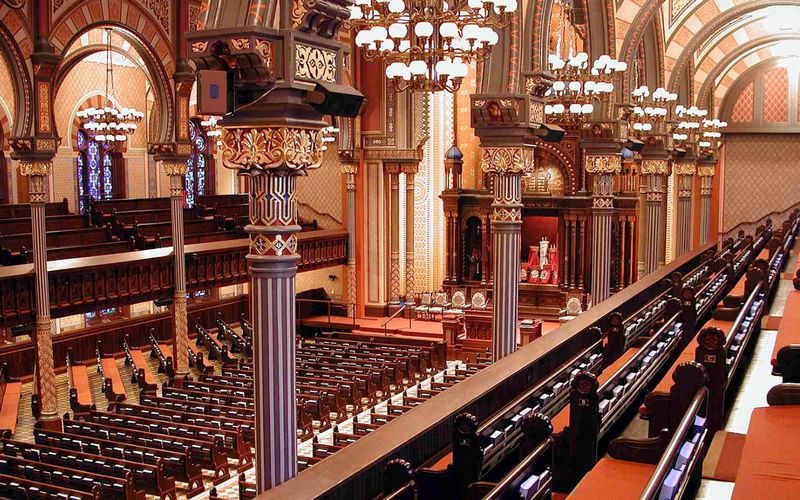
Inside, the sanctuary is filled with light, color, and refined detail — from stained glass windows to carved woodwork. Despite its grandeur, the space feels warm and inviting, making it both an architectural treasure and a vibrant spiritual home.
Why These Synagogues Inspire
These synagogues are more than beautiful buildings — they are living records of Jewish history, creativity, and survival. Each reflects the culture and era in which it was built, while also carrying timeless spiritual meaning.
Whether still serving active congregations or preserved as cultural landmarks, they remind us that faith and beauty often go hand in hand. Together, they form a global mosaic of Jewish heritage — one that continues to inspire travelers, historians, and architecture lovers alike.